Your download is here
Thank you for sharing your email and stepping into this space.
This workbook has been created with care, intention, and lived experience.
When you’re ready, you can download it below.
If you find value in this work and feel called to support its creation, you’re welcome to leave a small offering via Buy Me a Coffee.
This workbook is a gift - your presence here is already enough.
-
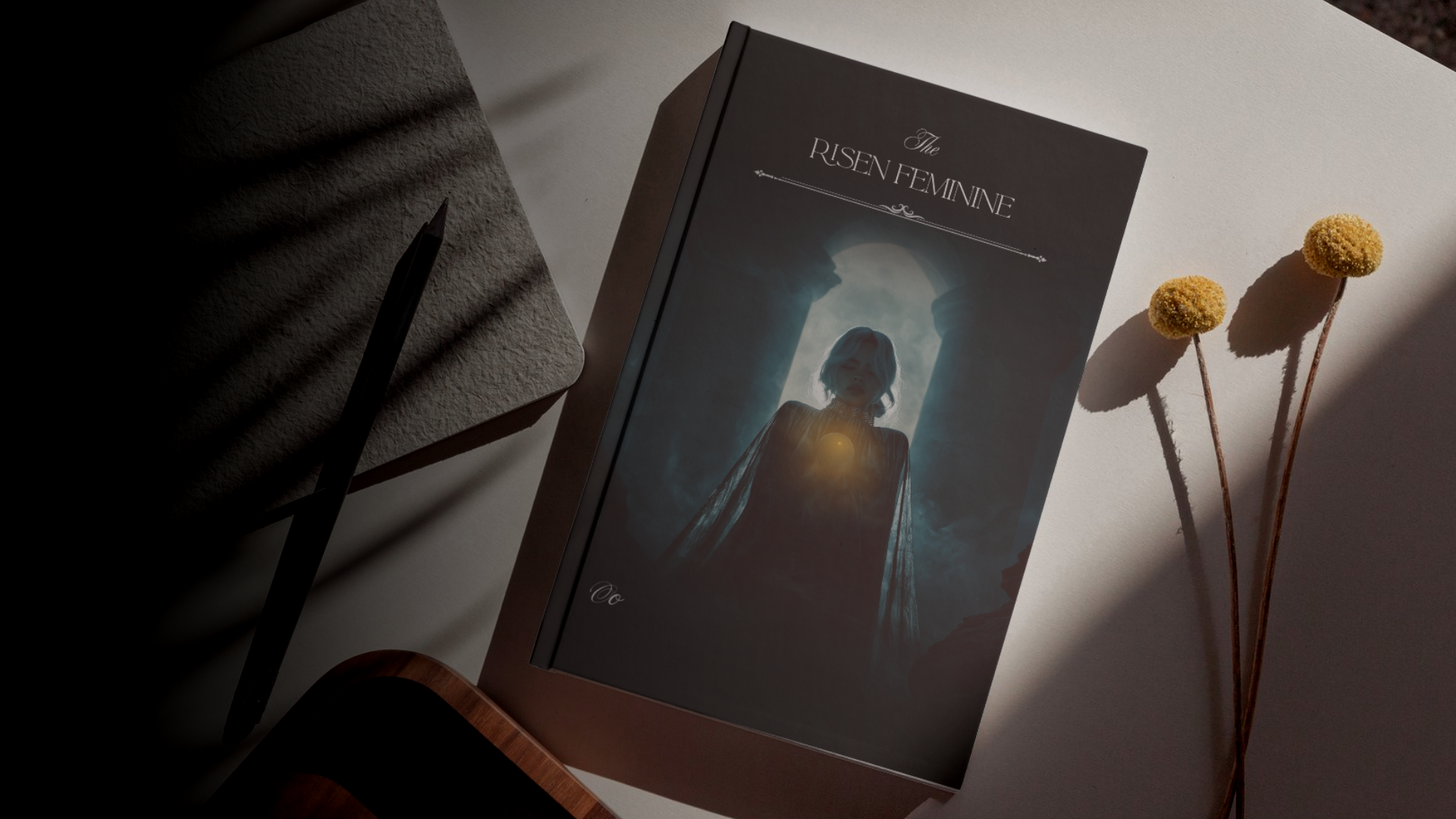
The Risen Feminine is a reflective, educational, and spiritually informed self-development offering. It is designed to support self-awareness, emotional integration, and personal growth through journaling, mindfulness, creative expression, and archetypal exploration.
This work is not therapy, does not diagnose or treat mental health conditions, and does not replace professional medical or psychological care. Participants experiencing significant distress are encouraged to seek qualified professional support alongside this work.
All practices are optional and self-paced. No personal disclosure is required, and participants are encouraged to honour their own boundaries, capacity, and inner timing.
Spiritual language and figures (including Mary Magdalene) are used as symbolic and archetypal lenses, not as doctrine. This work may be approached from spiritual, psychological, philosophical, or purely reflective perspectives.
The facilitator acts as a guide, not an authority or saviour. Autonomy, discernment, and personal sovereignty are central to this work.
The practices within The Risen Feminine are informed by established research in reflective journaling, mindfulness, creative expression, compassion-based practices, and depth psychology.
This offering is intended as a supportive guide, not a prescription, and honours the uniqueness of each individual’s journey.
While this framework is rooted in my own lived experience, I have also explored how its core practices align with established research in psychology, mindfulness, expressive arts, and positive psychology. I am not a medical professional, and this work is not intended as clinical advice, but as a reflective guide drawn from personal transformation.
To ensure that these reflections are supported by credible evidence, I reference systematic reviews, meta-analyses, and studies published in respected peer-reviewed journals. This research consistently shows that practices such as journaling and writing, creativity and expression, forgiveness and release, meditation, solitude, and shadow integration are widely recognised as effective pathways for supporting wellbeing.
In this way, the framework bridges lived experience with academic research, demonstrating how reflective inner practices and spiritual insight are supported by contemporary psychological research.
Evidence-Informed Foundations of the Seven Sacred Steps.
(Using contemporary, high-credibility academic research)
I. Training – See life’s trials as sacred teachers
(Shadow → Awareness)
Evidence-based rationale:
This step is supported by research on Jungian psychotherapy and shadow integration, which demonstrates that bringing unconscious material into conscious awareness leads to increased self-understanding, emotional regulation, and long-term psychological growth. Reframing life experiences as meaningful initiations rather than punishments aligns with the individuation process, where suffering becomes a source of insight rather than fragmentation.
Supporting research:
Roesler, C. (2013). Evidence for the effectiveness of Jungian psychotherapy: A review of empirical studies.
https://pmc.ncbi.nlm.nih.gov/articles/PMC4217606/
II. Awakening – Pierce the illusions of the Dark Night
(Ignorance → Remembrance / Awareness)
Evidence-based rationale:
Awakening is supported by mindfulness research showing that developing present-moment awareness is associated with reduced depressive symptoms, emotional reactivity, and identification with distressing thoughts. This “witness stance” allows individuals to see clearly rather than react unconsciously, supporting discernment, intuition, and the breaking of illusion.
Supporting research:
Liao, J., Chen, H., Zhang, L., & Liu, W. (2024). Mindfulness moderates the relationship between loneliness and depressive symptoms.
https://www.nature.com/articles/s41598-024-81462-3
III. Integration – Transform shadows into strength
(Darkness → Integration)
Evidence-based rationale:
Research in expressive writing and Jungian-oriented depth psychology demonstrates that engaging directly with emotional material through reflection and life review reduces distress and promotes integration. Facing rather than suppressing shadow material allows unresolved emotions to be processed safely, transforming inner conflict into psychological coherence and resilience.
Supporting research:
Hoult, L. M., et al. (2025). Positive expressive writing interventions: A systematic review.
https://journals.plos.org/plosone/article?id=10.1371/journal.pone.0308928
Baikie, K. A., & Wilhelm, K. (2005). Emotional and physical health benefits of expressive writing.
IV. Alchemy – Turn your wounds into wisdom
(Desire → Expression → Meaning)
Evidence-based rationale:
Creative expression supports psychological transformation by giving symbolic form to emotional experience. Research in art therapy and the body mind model shows that creativity facilitates meaning-making, emotional regulation, and the integration of traumatic material, allowing pain to be transformed into insight, identity, and purpose.
Supporting research:
Czamanski-Cohen, J., & Weihs, K. (2016). The bodymind model: A platform for studying mechanisms of change in art therapy.
https://doi.org/10.1016/j.aip.2016.08.002
V. Gifts – Channel wisdom into sacred tools
(Wrathful Wisdom → True Wisdom)
Evidence-based rationale:
Once emotional material has been integrated, expressive practices such as journaling and creativity support clarity, coherence, and insight. Research shows that these practices reduce mental distress, support cognitive organisation, and strengthen meaning-making, allowing inner wisdom to be expressed outwardly in grounded and constructive ways.
Supporting research:
Hoult, L. M., et al. (2025). (see above)
Baikie, K. A., & Wilhelm, K. (2005). (see above)
VI. Guiding – Illuminate the path for others
(Sovereignty → Embodied Self)
Evidence-based rationale:
Research on solitude, reflection, and individuation demonstrates that time spent in self-regulation and inner alignment strengthens autonomy, reduces rumination, and supports embodied leadership. True guidance emerges not from rescuing others, but from modelling integration, boundaries, and emotional stability.
Supporting research:
Bratman, G. N., et al. (2015). Nature experience reduces rumination and subgenual prefrontal cortex activation.
https://arxiv.org/abs/1907.10013
Roesler, C. (2013). (see above)
VII. Mastery – Find the Kingdom of Heaven within
(Integration → Inner Peace / Wholeness)
Evidence-based rationale:
Meta-analytic research demonstrates that meditation and mindfulness practices reliably reduce stress, anxiety, and depression while supporting long-term emotional regulation and wellbeing. When combined with individuation and self-awareness, these practices support a stable sense of inner peace, reduced reactivity, and authentic self-alignment — what spiritual traditions describe as inner wholeness.
Supporting research:
Goyal, M., et al. (2014). Meditation programs for psychological stress and well-being: A systematic review and meta-analysis.
https://jamanetwork.com/journals/jamainternalmedicine/fullarticle/1809754
Liao, J., et al. (2024). (see above)
Closing note:
These references are offered to demonstrate that the practices woven throughout this framework — reflection, shadow integration, creativity, mindfulness, forgiveness, solitude, and meaning-making — are well supported by contemporary psychological research, while remaining open to spiritual interpretation and personal lived truth.
Copyright
© 2025 Optimal Ophelia. All rights reserved.
All written content on this website is the intellectual property of Optimal Ophelia and may not be copied, reproduced, or distributed without prior written permission.